
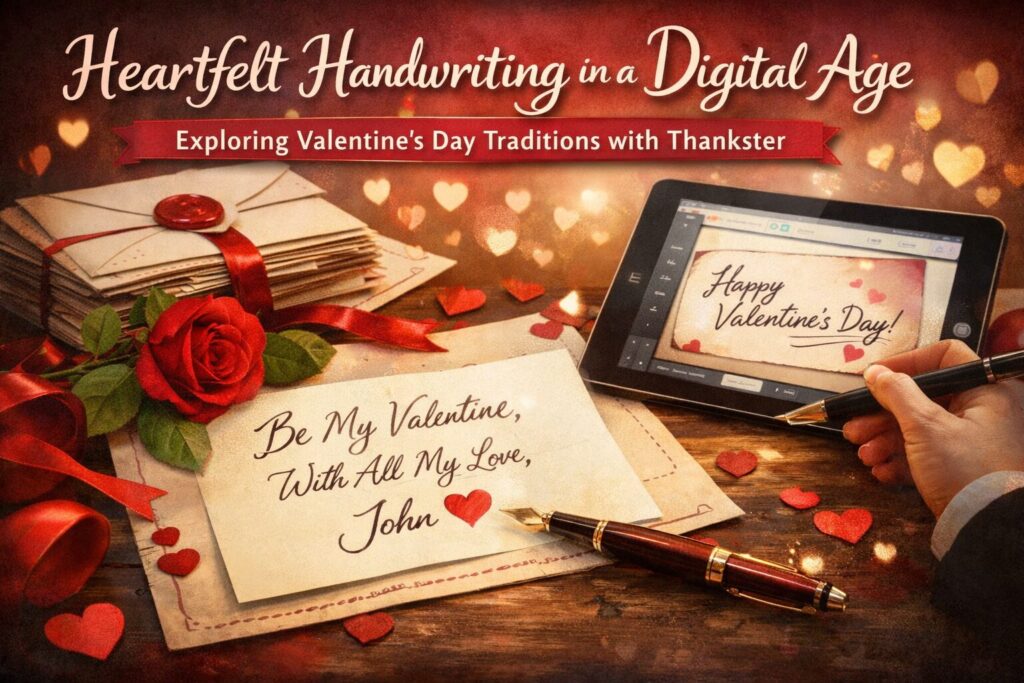
The Enduring Power of Handwritten Sentiments
Valentine’s Day stands as a testament to our timeless desire for human connection. In an era where digital communication dominates our daily interactions, the simple act of exchanging handwritten notes has gained a renewed significance. There’s something profoundly moving about seeing someone’s handwriting – the unique curves, pressure points, and personal flourishes that no font can truly replicate.
The psychology behind handwritten notes speaks to our fundamental need for tangible connections. Imagine receiving a message that someone physically crafted for you – their hand touching the same paper you now hold. This physical connection creates an emotional bridge that digital messages, despite their convenience, simply cannot construct.
Valentine’s Day: A History Written by Hand
The tradition of exchanging Valentine’s cards dates back centuries, with the oldest known valentine still in existence written in 1415 by Charles, Duke of Orleans, to his wife while he was imprisoned in the Tower of London. This historical foundation reveals something significant about human nature: our need to physically manifest our emotions through tangible artifacts.
Throughout the centuries, Valentine’s communications evolved from handwritten poetry to elaborately decorated cards during the Victorian era, when advances in printing technology made commercial cards widely available. Yet even as production became mechanized, the most treasured valentines remained those with personal touches – handwritten messages that transformed mass-produced cards into intimate keepsakes.
The Handwriting Renaissance in Modern Romance
In today’s hyperconnected world, the pendulum is swinging back toward the authentic and tangible. Many people now recognize that while a text message disappears with a screen swipe, a handwritten note becomes a treasured artifact – something to be kept, revisited, and cherished.
The renaissance of handwritten communication isn’t merely nostalgia; it represents a conscious choice to invest time and effort into meaningful connection. A handwritten valentine communicates not just through its words but through the implicit message: “You’re worth the time this took me.”
Where Thankster Bridges Tradition and Technology
The modern dilemma many face is reconciling our appreciation for handwritten communication with the realities of busy schedules and, for some, discomfort with their handwriting. This is the gap that Thankster bridges with remarkable efficiency and elegance.
Thankster represents an innovative approach to preserving the handwritten tradition while acknowledging modern constraints. By enabling personalized, authentic-looking handwritten communications through technology, it maintains the essential human element that makes handwritten notes special while removing the barriers that might prevent someone from creating them.
The Psychological Impact of Receiving Handwritten Notes
The emotional response to receiving a handwritten note activates different neural pathways than receiving digital communication. Consider how you might feel upon finding a handwritten envelope among bills and junk mail – there’s an immediate emotional resonance, a pause in the day’s rhythm, an anticipation that digital notifications rarely generate.
For the recipient, a handwritten valentine represents thoughtfulness in an age of convenience. It signals that the sender chose the more meaningful path rather than the easier one. This perception fundamentally alters how the message is received and internalized.
Valentine’s Day in the Business World
Beyond romantic relationships, Valentine’s Day offers businesses an opportunity to strengthen client relationships through authentic appreciation. Corporate valentine gestures, when done thoughtfully rather than as obvious marketing ploys, can transform professional relationships into more meaningful connections.
Professional settings that embrace the handwritten note stand out in a sea of automated emails and generic corporate communications. The business applications of services like Thankster allow organizations to scale authentic communication in ways previously impossible, maintaining the personal touch even across large client bases.
Technological Innovation Preserving Human Tradition
The technology behind handwriting replication represents a fascinating intersection of tradition and innovation. Advanced algorithms analyze real handwriting to create authentic-looking results that maintain organic imperfections and make the handwriting feel genuine. Our software does subtle things like character variation to give the writing we produce an authentic look and feel.
This technological approach preserves the aesthetic and emotional value of handwritten communication while offering practical benefits: legibility, consistency, and accessibility for those who might struggle with physical writing due to health issues or time constraints.
Features that Become Available
Thankster makes possible many features that would not be practical when writing by hand. For example, you can completely personalize thousands of cards at scale, with images, QR codes, messages, signatures, etc. on any page. Or you can choose from one of our many design templates (we just added a lot of them for the holidays, including Valentine’s Day).
We also have many automation options. You can set up recurring orders (e.g., for birthday or anniversaries), drip campaigns (timed sequences with different mailer types), and almost anything else through our integrations with Zapier, Make.com, and others (for example, trigger a card when stage in your CRM changes to closed/won, or when a lead is added).
Looking Forward: The Future of Personal Communication
As we look to the future, we might imagine personal communication evolving not by abandoning traditions but by thoughtfully integrating them with technological capabilities. The underlying human needs – to be seen, valued, and meaningfully connected – remain constant even as expression methods evolve.
The most forward-thinking approach may not be replacing handwritten communication with digital alternatives but finding innovative ways to preserve what makes handwriting special while addressing its practical limitations. This balanced perspective honors tradition while embracing progress.
Embracing the Best of Both Worlds
Valentine’s Day offers a yearly reminder of what matters most in our connections with others. Whether through perfectly imperfect handwriting or technologically assisted personal notes, the key lies in the intention and authenticity behind the communication.
The ongoing relevance of handwritten valentine traditions speaks to something enduring in human connection – our desire to create lasting tokens of affection that transcend the ephemeral nature of digital interaction. By preserving these traditions while making them more accessible, we honor both our past and our future.